Between Then and Now: Performing Archives
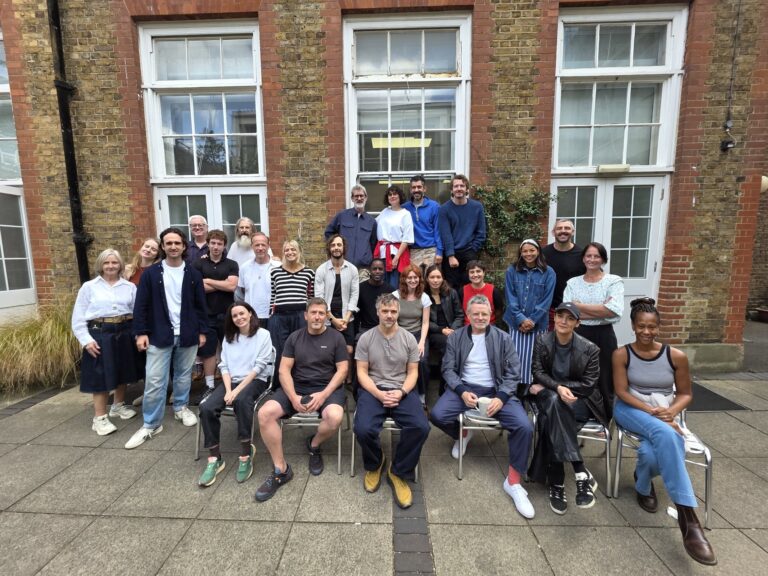
Last week the Performance Research Group hosted a conference, Between Then and Now: Performing Archives, at Royal Exchange Theatre. A-Level student, Bill Egan, joined us at the conference on a work experience placement from Burnley College. We invited him to be a critical respondent as well as work with our conference team in welcoming delegates and supporting the event. He attended talks, invigilated installations, hand typed name badges for all the delegates on arrival and joined them on a tour of the archives underneath the Royal Exchange. To capture this experience of our conference about archives Bill shares his reflections below.
Conference reflections
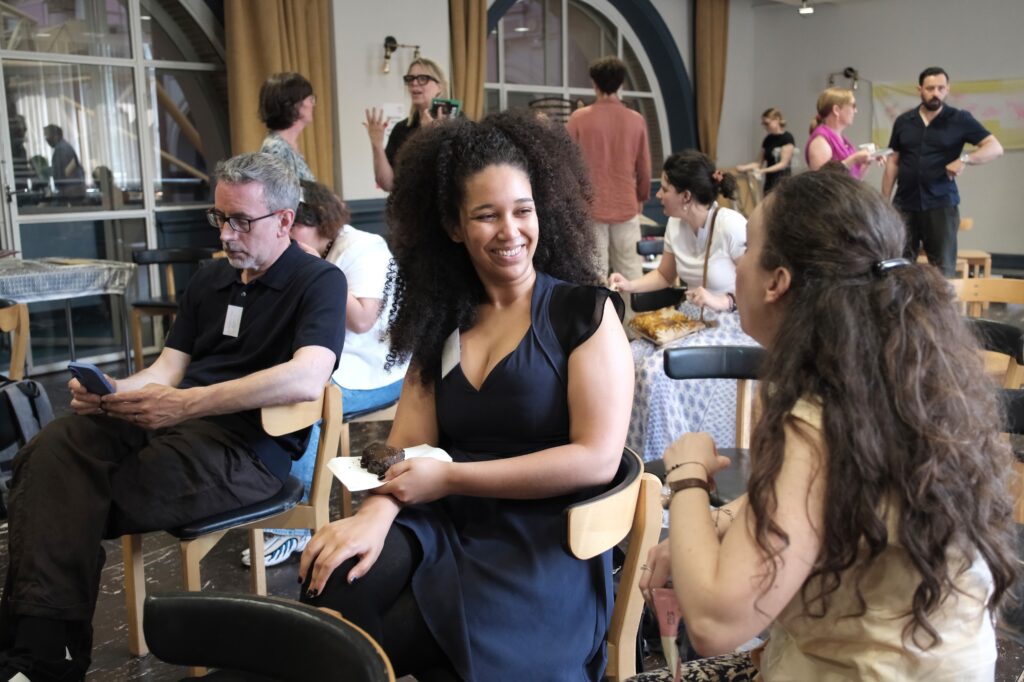
The archives conference at the Royal Exchange Theatre was one I went into rather blindly. After being initially very unsure about what was meant by ‘archives’ due to the vague nature of the term, after the first day it was apparent to me that archives can mean almost anything remotely linked with past and/or preservation. The variety of each presentation, and how personal they all seemed to be, was alluring. The themes were not only intellectually stimulating, but emotive, and the range of interesting topics (including music, the circus, the written word, Italian silent cinema, photography) kept the days alive. And every person in the room – whether presenting or not – had something interesting to say.
Lauren Nicole Whitter’s talk on the living archive was formatted more as a discussion, with everyone in a circle, which I found particularly engaging, and all the more informative due to the historical significance of telling stories that way. Talk of the soul near the end was unexpected but beautifully relevant. What I took away from this was essentially, not all archives are physical, and that doesn’t make them any less real. I couldn’t help realising the contradiction of physical archives: that despite the fact that older and more rare things can be lost, damaged, never seen again, here people were with what they had, even if it was only their mind. It is human nature to hold onto things. It is time’s nature to kill them. Sad as that is, there are some things that humans can carry in our hearts for centuries, that time can never touch: stories and performances that are repeated and adapted again and again through generations.

The archives tour in the theatre’s basement was a gold mine. There were programmes, photographs, scripts, scores, index cards of information, all sorts from hundreds of past shows. I could have looked for hours. The ghost rumours were likewise intriguing.
And speaking of ghosts, Alexander Kelly’s presentation about thin places was extremely compelling, as topics of belief often are. To be able to hear possible explanations for such myths without compromising its mystery was most wondrous. The concept of hearing stories of existing folk tradition to create a new archive in our memories is a moving one, regardless of the fact that memories fade.

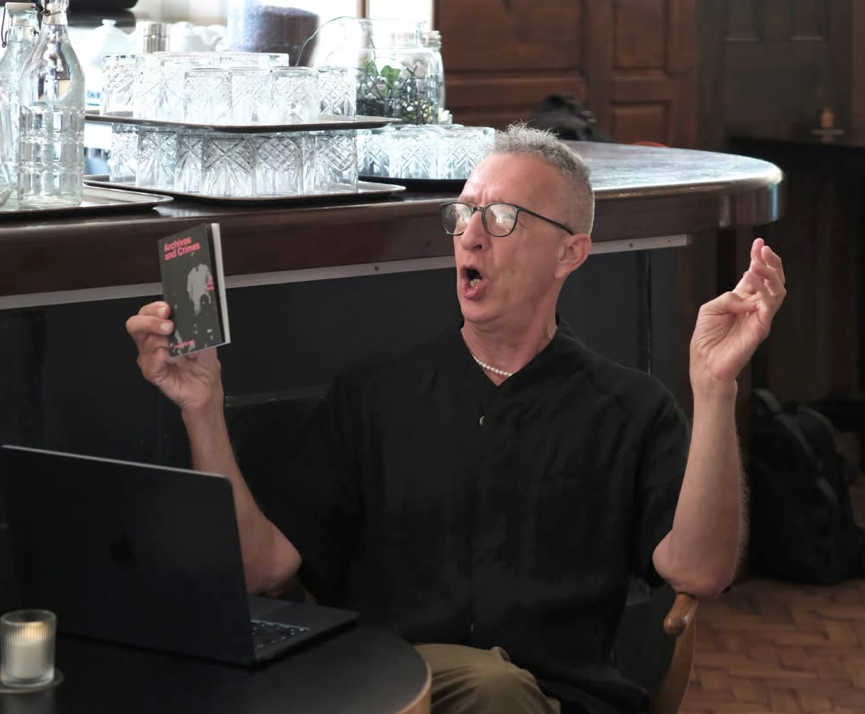
We were also shown the section of the basement floor that years ago would have been occupied by horses and carriage (hence the name Royal Exchange Theatre). Peader Kirk’s interactive and performative speech in the bar was very effective in a way that rung similar to me in premise. He painted vivid yet concise pictures of the bar being various other places, in various years, and he used the audience – I was the Blue Man Group. It was an amusing piece for near the end of the day, about the now shut greenrooms venue. He was no doubt a charismatic addition. My favourite quote from it: ‘Interacting with an AI is necromancy’.
Aside from the talks I spent a significant amount of time reading some of Dave Evans’ enticing book: QUEUE UP AND DANCE – Remembering Quadrant Park 1990-9. I found it delightful, and rather touching that a night club that ran for as little as two years could have such a great impact on so many people. To have all these stories from various people who had different connections to the quad curated into the tangible archive of a book registered to me as very important, but not inevitable, which is what I found so brilliant about the idea.
Riham Isaac too presented us with a book – a scrap book of Palestinian archive, which was artistically beautiful, busy, and powerful, as a physical depiction of the culture, memory, and struggle for land in Palestine with hand written notes, paintings, posters, etc. In looking at this I saw that resistance and protest may be difficult, but it can absolutely be beautiful too.
It gives me great pleasure to write what could one day be seen as an archive in itself of this event, alongside the photographs taken (thanks Brian), name tags typed, posts from various other perspectives, and memories made.
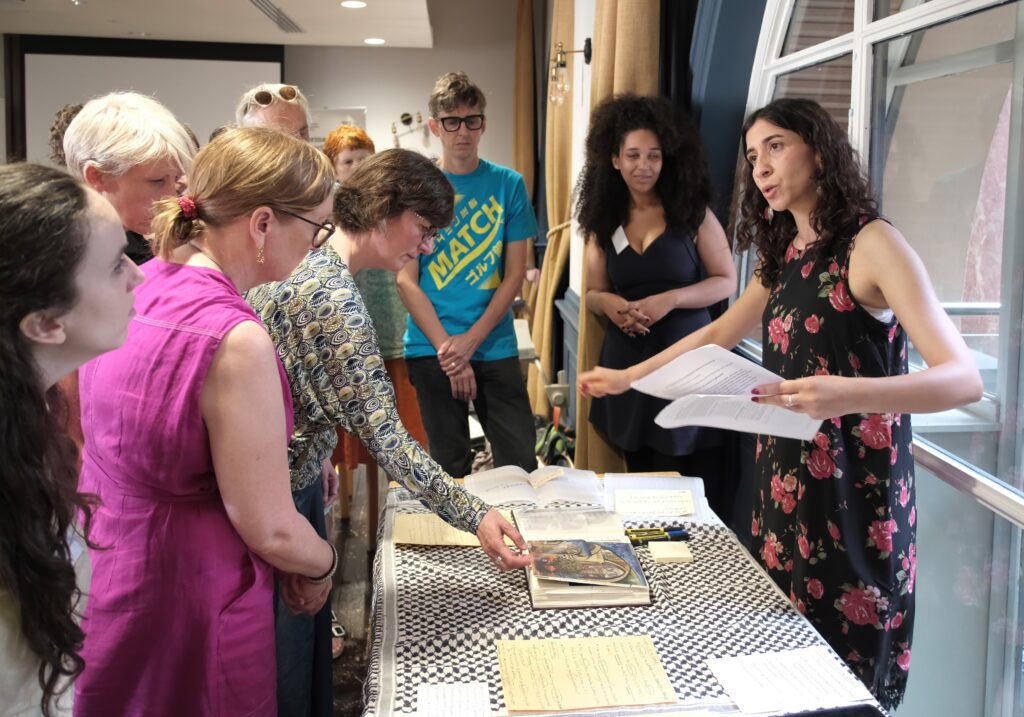
Images: Brian Slater (Point of View Photography).